

Books + Sacred Texts
Placing Buddahood in Your Hands (Powa)
Placing Buddahood in Your Hands (Powa)
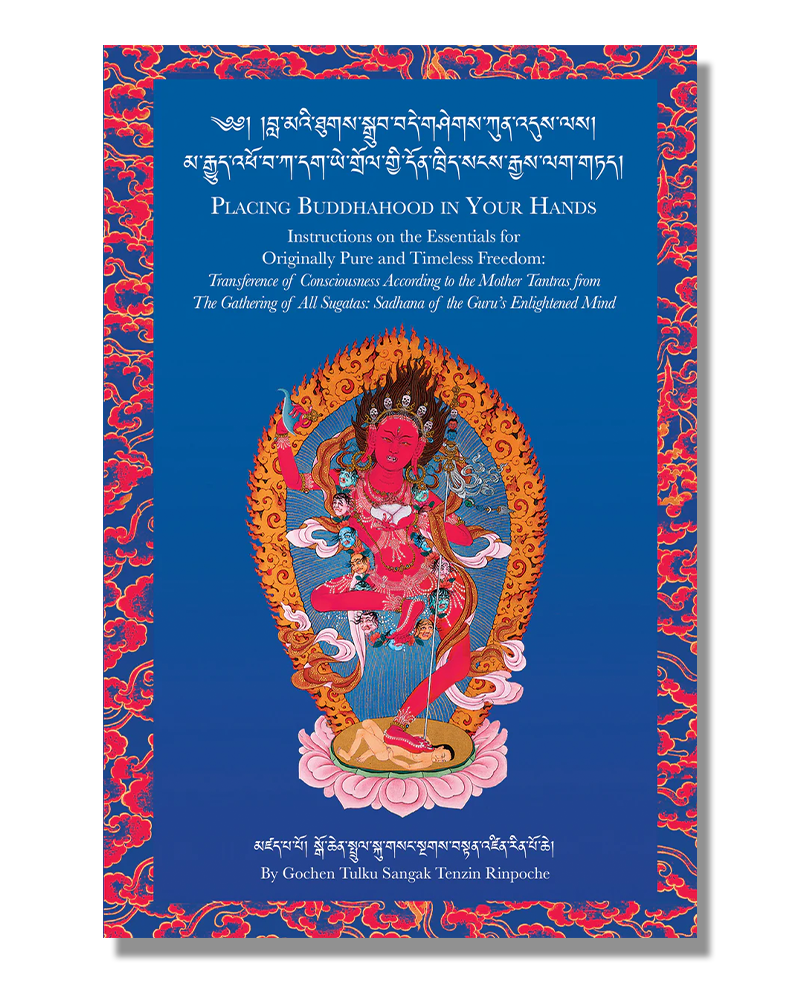
This book contains both the extensive and daily practice texts for powa (the transference of consciousness) practice from the Namchak Tukdrup cycle, a commentary to the Tukdrup Powa practice composed by Gochen Tulku Sangak Rinpoche called Placing Buddhahood in Your Hands, pictures and diagrams to aid your visualization, and an aspiration prayer from the Kusum Gongdu cycle.
Who is this book for?
Anyone who has received teachings on the Namchak tradition of powa, or will be attending teachings on this practice.
Practices
Powa
Couldn't load pickup availability
Who is the journal for?
Who is the journal for?
- Great for new meditators and those looking to rejuvenate their practice.
- Those interested in cultivating more spaciousness, deepening their relationship with themselves, and finding a non-digital path towards reflection, guidance, and contemplative support.
- The journal also provides an avenue to take your practice beyond your life, making it a perfect tool for book clubs and meditation groups.
Practices You’ll Learn
Practices You’ll Learn
- Clearing the Stale Energies: A method to create more stillness and ease during meditation.
- Shamata: A meditation practice to increase awareness, clarity, and focus.
- Tonglen: A compassion practice to cultivate boundless compassion for all beings, including yourself.
- Loving Kindness: A meditation practice of sending goodwill to all beings.
About the Author
Gochen Tulku Sangak Rinpoche
Tulku Sangak Rinpoche is the world lineage holder of the Namchak lineage and the spiritual director of Namchak Retreat Ranch and Ewam International Centers worldwide. An outstanding meditation master and scholar, he is a primary lineage holder of the Namchak lineage and holds other widely practiced Tibetan lineages. Rinpoche is also an expert stupa builder. He established the Turquoise Leaf Nunnery, a Nepalese convent where over 50 nuns reside and practice. After establishing the first Ewam in the U.S., the center’s Dharma activity prospered worldwide, including Taiwan, Hong Kong, Bhutan, India, and other places.
